"But as touching the feathers whereof the Scythians say that the air is full, insomuch that none can see or traverse the land beyond, I hold this opinion." - Herodotus, in Histories, 5th Century BC
It has snowed. I am once again finding myself becoming aware of admiring the snow in different forms. It's been on the top of my list of blog posts I want to write: it also feels like the universe is offering me a great chance to take a deep plunge into its layers.
I love snow. How deep can we plunge?

As I'm leaving school the snowploughs are on the move. I watch, just as I followed them from the windows of my childhood home since a very early, diaper age (based on what I'm told and vaguely remember). There is something mesmerizing about the action. The ploughs twist and turn, moving snow, putting it aside, loading it and piling it. There are variations in the style, in the vehicles used for it and the shapes of the ploughs. Some are V-shaped, sometimes inverted, affecting if the snow gathers within the plough or rather if it glides to the sides, separating at the tip of the blade. The inverted V is more of a thing I noticed as a child. Now they seem more uniform, with many standard models of tractors (Wille for example) that seemingly have gained much ground. The ploughs also seem to usually be in one diagonal, oblique line. I would have a small moment of mixed joy and nostalgia if I'd see snow separating in a continuous motion from the tip of the reversed V-shape plow.

The Wille tractors are very nimble and agile due to their design, which makes it possible to articulate the hind parts and front of the trunk around the cockpit in a jackknife-like way.

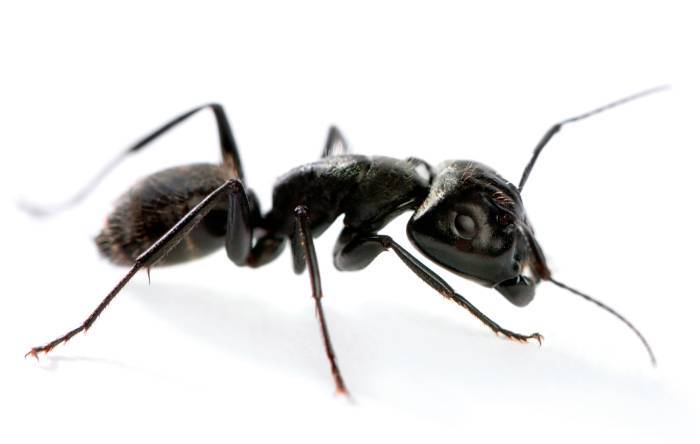
It reminds me of the shape of an ant. Nature is the mother of invention.
I have been trying to puzzle out why I pause to look at tractors plowing and how to translate it through language. A term which popped out of an essay in a previous reading seminar about dramaturgy, "free radicals" feels fit with the action of snowplowing tractors. David Pledger, an Australian artist and director, brings it forth in his essay Concentric Circles of Dramaturgy. For me, it translates into how the snowplows disrupt the usual traffic choreographies of the cities:

Snowplows carefully twist and turn, mechanically dancing in the process of curating snow in strategic locations, out of the beaten paths. The snow piles also tell us what is prioritized. A constant set design on the city level, if you may. Once they get too big, along the most central roads or focal nodes of transport, they're loaded on trucks and transported to a snow dump.
With their arms extending from the tractor to the plow, with the human operating through levers in the cockpit, it's the closest one comes in everyday urban hustle to Transformers, cyborgs or Neon Genesis Evangelion.

As of now, the courses at the university have changed. Today we started a course on Expanded dramaturgies. Since it's my first day, I'm not very wise yet except for expectations. Our first task is to observe and sense weather. It's -8° celsius and the snow has stayed and accumulated since the end of December. Snow takes a huge part of both mine, but also other's weather observations in a debrief afterwards.

I have been observing snow on my explorations lately, to be able to pinpoint it in a verbal form. I take steps on the snow-covered roof terrace at the university. First I perceive it through my feet: The snow crunches beneath my soles, both a physical, tactile sensation and an auditory sensation. My next memory is a visual one: the untouched snow bank in the middle. Then I travel in the footsteps of someone before me, since it's easier and keeps my shoes dry. Due to the weather, and only starting the time spent outside, one has to make strategical choices in actions, I preserve activities that risk getting wet (and thus cold) for later.
Paths of movement appear with time. The snowfall affects how we move, occasionally forcing us to take different routes on our way to familiar places. Some areas get more trodden and it's as if movement through space and time become compressed, materialized in the snow.


The path goes atop a fortified hill which offers glimpses of sunset.

In the debrief afterwards someone remarks that Finnish language has multiple words for the consistency of snow. The geography and weather has its effect on language. On the roof it's dry due to a cold day, Pakkaslumi loosely translates to minus-degree-snow. Loska, plus-degree-melting-snow known for its grey appearance is my nemesis and translates emotionally for me as wet shoe vitutus. The middle ground, when the temperature is tiptoeing around 0° modifies the form into suojalumi, shelter/slushy/heavy wet snow. It is a perfect day to gather your friends and sleds to embark on a laughter filled safe adrenaline adventure at a nearby hillside.


Bypassers stopped to take pictures of some of the sculptures made by those who waited for the late-arrivals to join the party. What a way to make transient art and spread attention from the usual focal points!
"I love snow. I feel honored to stand amidst slowly, lightly falling snowflakes and privileged to derive pleasure from it." I proclaim from the bottom of my heart, deeply, but not very seriously wishing that the first snow would stay and keep growing layers from December to March each year. It's like a long durational confetti cushioning inescapably large areas. It's also standing amidst something that you're slowly losing.
That durational confetti is raining less and shorter. Nothing is forever, especially snowmen.
I have edited a passage away from here, because I don't feel capable nor comfortable to treat its subject at this point. I don't see a point of return either, so I will accumulate enough knowledge, spirits and fortitude to speak of it sometime, but I can't see a way to continue this blog after. I'm afraid all sentences will be dead ends and fouled. Perhaps one can tread backwards the path to hope.

I go back to thinking about the "snowflower" uttered, and how we may need new ways to describe things to see them anew again, the potential of familiars in times of change. Blogging itself can be a semiurgic practice, i.e. "the production of new meanings by the creation of new signs; the expansion of the semiosphere."
Snow appears white in color despite being made of clear ice. This is because the many small crystal facets of the snowflakes scatter the sunlight between them.
That brings me to the work of artists, performers, journalists and writers. Work defined in a way that I'd love to partake in. The Great Work of a Master?
"Written words cause ripples in the fabric of reality."
Take this as a scream for help to preserve snow from a soul.
Economics are the method; the object is to change the soul, said the British prime minister Margaret Thatcher on the brink of the 1980's as the UK, and large parts of the "West" shifted into next gear of neoliberalism.
"Herodotus' accuracy of information is in inverse proportion to geographical distance from the center: the more remote a country, the more need to rely on hearsay, and the higher the risk of receiving distorted facts" - Herodotus and the Ends of the World, Ippokratis Kantzios
There are souls who operate on different sets of values, co-operate, enjoy each other's company, dream and build snow castles without ever imagining an economic value in return, parting their ways knowing it will melt. There are places that appear momentarily waiting to be witnessed. There are spirits in places. Let us not forget the infinite values around us that occasionally fall as feathers, white confetti on us.

"Northward of that country snow falls continually, though less in summer than in winter, as is to be expected. Whoever has seen snow falling thickly near him knows of himself my meaning; for the snow is like feathers; and by reason of the winter, which is such as I have said, the parts to the north of this continent are uninhabited. I think therefore that in this tale of feathers the Scythians and their neighbours do but speak of snow in a figure. Thus then I have spoken of those parts that are said to be most distant." - Herodotus, Histories


No comments:
Post a Comment