Wednesday, January 28, 2026

A Sky Full of Feathers

"But as touching the feathers whereof the Scythians say that the air is full, insomuch that none can see or traverse the land beyond, I hold this opinion." - Herodotus, in Histories, 5th Century BC

It has snowed. I am once again finding myself becoming aware of admiring the snow in different forms. It's been on the top of my list of blog posts I want to write: it also feels like the universe is offering me a great chance to take a deep plunge into its layers.

I love snow. How deep can we plunge?


           Someone in class calls a snowflake a "snowflower" instead. It's instantly endearing. Through the new word a newfound interest for the singular snow particle, itself a combination of molecules appears.


As I'm leaving school the snowploughs are on the move. I watch, just as I followed them from the windows of my childhood home since a very early, diaper age (based on what I'm told and vaguely remember). There is something mesmerizing about the action. The ploughs twist and turn, moving snow, putting it aside, loading it and piling it. There are variations in the style, in the vehicles used for it and the shapes of the ploughs. Some are V-shaped, sometimes inverted, affecting if the snow gathers within the plough or rather if it glides to the sides, separating at the tip of the blade. The inverted V is more of a thing I noticed as a child. Now they seem more uniform, with many standard models of tractors (Wille for example) that seemingly have gained much ground. The ploughs also seem to usually be in one diagonal, oblique line. I would have a small moment of mixed joy and nostalgia if I'd see snow separating in a continuous motion from the tip of the reversed V-shape plow. 

       Wille-tractor on the move!           

The Wille tractors are very nimble and agile due to their design, which makes it possible to articulate the hind parts and front of the trunk around the cockpit in a jackknife-like way. 

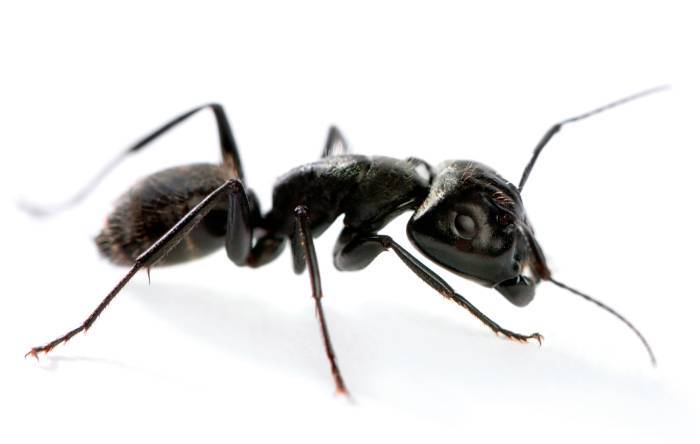
An attempt to communicate what I'm talking about, the axis of movement through image. There's a reason I didn't get into fine arts or engineering.


                                                   It reminds me of the shape of an ant. Nature is the mother of invention.

I have been trying to puzzle out why I pause to look at tractors plowing and how to translate it through language. A term which popped out of an essay in a previous reading seminar about dramaturgy, "free radicals" feels fit with the action of snowplowing tractors. David Pledger, an Australian artist and director, brings it forth in his essay Concentric Circles of Dramaturgy. For me, it translates into how the snowplows disrupt the usual traffic choreographies of the cities:

They maneuver around traffic lights and lamp posts, cross the streets, drive on pedestrian sidewalks and change the landscape. 

Snowplows carefully twist and turn, mechanically dancing in the process of curating snow in strategic locations, out of the beaten paths. The snow piles also tell us what is prioritized. A constant set design on the city level, if you may. Once they get too big, along the most central roads or focal nodes of transport, they're loaded on trucks and transported to a snow dump. 

With their arms extending from the tractor to the plow, with the human operating through levers in the cockpit, it's the closest one comes in everyday urban hustle to Transformers, cyborgs or Neon Genesis Evangelion.

   Snow ploughers might feel a bit like mecha pilots, I imagine. Or am I making it too much in my image?

As of now, the courses at the university have changed. Today we started a course on Expanded dramaturgies. Since it's my first day, I'm not very wise yet except for expectations. Our first task is to observe and sense weather. It's -8° celsius and the snow has stayed and accumulated since the end of December. Snow takes a huge part of both mine, but also other's weather observations in a debrief afterwards. 

"Zooming into a point that is not a vertex may cause the curve to rotate." - A mathematical language I linguistically have difficulty comprehending, while intuitively appreciating the aesthetic logic of geometry!

I have been observing snow on my explorations lately, to be able to pinpoint it in a verbal form. I take steps on the snow-covered roof terrace at the university. First I perceive it through my feet: The snow crunches beneath my soles, both a physical, tactile sensation and an auditory sensation. My next memory is a visual one: the untouched snow bank in the middle. Then I travel in the footsteps of someone before me, since it's easier and keeps my shoes dry. Due to the weather, and only starting the time spent outside, one has to make strategical choices in actions, I preserve activities that risk getting wet (and thus cold) for later. 

Paths of movement appear with time. The snowfall affects how we move, occasionally forcing us to take different routes on our way to familiar places. Some areas get more trodden and it's as if movement through space and time become compressed, materialized in the snow.

                                          Not the first to walk a narrow sidewalk close to the city center. 

It brings me back to psychogeography and noticing areas of pull or repulse in urban landscapes. Snow shows these also through their color, changing due to dirt and pollution, sometimes carried even from far away by the wind. Ripple effects in water's solid form. 

Snow can show which buildings still serve a function and which not.

These paths, in less urban central areas can tell cues of something being at the other end or along the way. They can be shortcuts, following more accessible, trekkable geographical forms in the environment or lead to places which for whatever reason (a nature sight for example) have called a bunch of people to a certain location. 

"A preference for places that offer shelter or a view—ideally both—can be considered universal. Places of shelter and outlook strongly support survival. All of Finland’s ancient hillforts are sites from which one can see far while remaining hidden. The capercaillie prefers to forage (that is, eat its winter food, pine needles) in the dense crown of an old pine growing on a rocky hill, from which there is good visibility of the surroundings." - Siksi paikoilla on väliä, Esoteerinen maantiede ja periferiaterapia, Marko Leppänen

                  One of the mesmerizing moments of my life, on top of a mountain range trespassing nation borders in Poland. 

                       With a little imagination, the right angle and spirit, snow banks can remind one of something larger than itself.

Snow itself lands as a blanket upon existing shapes on ground, making the forms curvier, softer and increasing the volume of the branches of a tree for example, thus, standing amidst trees covered by accumulated snow, a sense of shelter is increased, hence my calmness perhaps.

                                                                   
                                                 Two forms of shelter, glass roof covered by snow.


                                                                 Tree branches envelope.


                                        The path goes atop a fortified hill which offers glimpses of sunset.


"... the chimpanzees are experiencing an emotional reaction to forces of nature. How similar that is to our own spirituality; who among us is not stirred by the power of a towering, roaring waterfall, or energized and emotionally charged by a close bolt of lightning followed by a clap of thunder? Chimpanzees (and in my opinion, many other species) clearly are." - Exploring Evolution and Spirituality in Chimpanzees and Humans, Jane Goodall's Good for All News, Bill Wallauer

In the debrief afterwards I listen as someone expresses their joy and nostalgia in relation to first snow and the taste and texture of it. I feel sad that one ingests our pollution with it and can't try it without having a second thought. I share the joy and rush of going outside to welcome the first snow, and one of the core experiences for me is how the city sounds different. Accumulated snow muffles the sound.

Part of the urban living experience is to hear the constant noise of cars with studded tires in the long months leading up to winter weather, which finally, for a brief while when the snow is fresh and hasn't been plowed nor eroded away underneath the tires gets dampened. A silencing relief. 

In the debrief afterwards someone remarks that Finnish language has multiple words for the consistency of snow. The geography and weather has its effect on language. On the roof it's dry due to a cold day, Pakkaslumi loosely translates to minus-degree-snow. Loska, plus-degree-melting-snow known for its grey appearance is my nemesis and translates emotionally for me as wet shoe vitutus. The middle ground, when the temperature is tiptoeing around 0° modifies the form into suojalumi, shelter/slushy/heavy wet snow. It is a perfect day to gather your friends and sleds to embark on a laughter filled safe adrenaline adventure at a nearby hillside.

 The suojalumi might offer some friction, reducing speed. If you get bored, be open to the malleability offered by the weather. 
                                               The snow in this form is perfect for the sculptor. 

(I can ask for permission to share the location of our snowcastle, leave a comment if you'd like to contribute on the next suojalumi)

Bypassers stopped to take pictures of some of the sculptures made by those who waited for the late-arrivals to join the party. What a way to make transient art and spread attention from the usual focal points! 

 "I love snow. I feel honored to stand amidst slowly, lightly falling snowflakes and privileged to derive pleasure from it." I proclaim from the bottom of my heart, deeply, but not very seriously wishing that the first snow would stay and keep growing layers from December to March each year. It's like a long durational confetti cushioning inescapably large areas. It's also standing amidst something that you're slowly losing.

That durational confetti is raining less and shorter. Nothing is forever, especially snowmen. 

I have edited a passage away from here, because I don't feel capable nor comfortable to treat its subject at this point. I don't see a point of return either, so I will accumulate enough knowledge, spirits and fortitude to speak of it sometime, but I can't see a way to continue this blog after. I'm afraid all sentences will be dead ends and fouled. Perhaps one can tread backwards the path to hope. 


                                                                               Here, have a Rothko painting instead!


I go back to thinking about the "snowflower" uttered, and how we may need new ways to describe things to see them anew again, the potential of familiars in times of change. Blogging itself can be a semiurgic practice, i.e. "the production of new meanings by the creation of new signs; the expansion of the semiosphere."

Snow appears white in color despite being made of clear ice. This is because the many small crystal facets of the snowflakes scatter the sunlight between them.

That brings me to the work of artists, performers, journalists and writers. Work defined in a way that I'd love to partake in. The Great Work of a Master?

"Written words cause ripples in the fabric of reality."

Take this as a scream for help to preserve snow from a soul. 

Economics are the method; the object is to change the soul, said the British prime minister Margaret Thatcher on the brink of the 1980's as the UK, and large parts of the "West" shifted into next gear of neoliberalism.

"Herodotus' accuracy of information is in inverse proportion to geographical distance from the center: the more remote a country, the more need to rely on hearsay, and the higher the risk of receiving distorted facts" - Herodotus and the Ends of the World, Ippokratis Kantzios

There are souls who operate on different sets of values, co-operate, enjoy each other's company, dream and build snow castles without ever imagining an economic value in return, parting their ways knowing it will melt. There are places that appear momentarily waiting to be witnessed. There are spirits in places. Let us not forget the infinite values around us that occasionally fall as feathers, white confetti on us. 

                                                      Let's not let Margaret get the last word.


"Northward of that country snow falls continually, though less in summer than in winter, as is to be expected. Whoever has seen snow falling thickly near him knows of himself my meaning; for the snow is like feathers; and by reason of the winter, which is such as I have said, the parts to the north of this continent are uninhabited. I think therefore that in this tale of feathers the Scythians and their neighbours do but speak of snow in a figure. Thus then I have spoken of those parts that are said to be most distant." - Herodotus, Histories 


Friday, January 23, 2026

A derivé, on Situationists

6,00€

 I return to the ending location of my derivé, a bar and restaurant with 3,6 stars on Google Maps (which I wouldn't go to usually when navigating with Google review stars) but an exterior exactly to my liking. I've had an interest to tour bars off the trodden path, whether due to where they're situated or not being on the popular bar crawl list. The thirst for beers and "tuning one's hearing to the local bandwidth" have existed since I found http://ostarinhelmi.blogspot.com/, a blog that's been on an indeterminate break since 2007. It follows a blogger touring different suburban malls, detailing them and usually ending with a review of the local bar.

Drama at the counter, someone comes back, proving the barkeeper that they've been billed "in the morning due to the shit machine", showing their bank account. It ends in laughs and resolution. Receipts are shown and a new beer is bought with cash. 

I've decided to dedicate this post partly to a movement which is responsible for me being here and of inspiration for my attempts to combine geography, psychology and art into a shareable activity. 

Artists of the World, randomize!

At crossroads, an opening for a choice I've willingly given away.

To make this blog post, I've asked each individual present at the university course to give me a direction. This is my method to create a random path and distance me from my personal inclinations for an experiment in dérive. For a different experience, feel free to follow the directions given in any way that suits you while reading this post. 

Since our society has a propensity to pinpoint and attribute a lot to single personifications, usually in the "genius guy" archetype, "The Guy" of the movement, Guy Debord (who did publish A LOT, and very self-confidently) defines it like this in his Theory of the Dérive: 

"In a dérive one or more persons during a certain period drop their relations, their work and leisure activities, and all their other usual motives for movement and action, and let themselves be drawn by the
attractions of the terrain and the encounters they find there."

 My first question question (hereafter Q) was left/right? 

                                                                    First answer: Left.

I end up in a brief afternoon rush, walking behind two other persons, with an adult and a child having just brushed past me before taking this picture. 

Next question: Up/down?

Up. 

I know the spatial surroundings well enough, that I instantly zoom for the stairwell leading up to the residential area of Merihaka. I do scan around just to be sure that nothing else rises around, but I'm right. 

       Our technique of rapid passage through varied ambiances is briefly altered by the red light.
 
While walking, I wonder which method I should use for documentation. I'm tempted to record the whole drifting but quickly run into problems of limited memory on phone, so I end up taking short clips.

I'm stepping to my next question: North or South? North.

There is only one way north; down.

"The spatial field of a dérive may be precisely delimited or vague, depending on whether the goal is to study a terrain or to emotionally disorient oneself." Guy Debord, Theory of the Dérive, published in the Internationale Situationniste #2, 1958

Trying to navigate according to the directions, without my usual reasons for moving in familiar locations, having occasionally to go backwards to make the next step jolts me into a semi-confused state. On a journey which starting point is our campus, all directions are familiar, but the ways, order and reasons of moving are different and make me feel like a stranger, especially with my camera, I feel a need to "fit" in, wear a double layer of the "ordinary citizen" on his way somewhere he knows, just happening to forget the phone in hand on a busy day. Occasionally I pretend to just have missed some GPS direction. 


Screenshots of graffitis on the way down. Do the shapes of the stairs affect their style, and in turn my camera angle? It can be such a bodily art practice, with each movement, from hips to shoulder to elbow to the flick of the wrist affecting the result in combination with time sprayed and the form it's imposed on.

      You might just need one experience making graffiti to feel the images kinesthetic reverberations.

   The Guy of the movement. 


Northwards.

Question: R/L?
Answer: L

Upon a bridge I've walked many times, I get the impulse I regret as I start it, to record my dérive as a vlog.


The ironic, not completely dedicated actor takes over (and yet very genuine, I feel vulnerable in a way I haven't in a long time sharing this). That's where my attention largely is for the rest of the trip. What I found immensely challenging, something vloggers often do, is being so open with the bypassing citizens, or in a bubble of their own, steadfast in their Vlog-universe. I usually end up looking around, silently whenever meeting fellow citizens.

Northeast or Southwest?

NE

Amongst the private property and high-rise office spaces it's hard to constantly follow a specific direction, so I end up taking turns at crossings when available. I end up on an inner yard that feels "imposing", towering heights, but doing a 360°, does offer a nice space to take breaths. 

Q: Continue or go back?

"if in the course of a dérive one takes a taxi, either to get to a specific destination or simply to move, say, twenty minutes to the west, one is concerned primarily with a personal trip outside one’s usual
surroundings. If, on the other hand, one sticks to the direct exploration of a particular terrain, one is concentrating primarily on research for a psychogeographical urbanism." Ibid.

Continue.

 "Chance is a less important factor in this activity than one might think: from a dérive point of view cities have psychogeographical contours, with constant currents, fixed points and vortexes that strongly discourage entry into or exit from certain zones."

Situationists were a strongly subversive, political marxist movement, against the status quo of the society and culture, on the prowl to create situations which could offer other ways to live. On a dérive, in terms of urban exploration and acting on the street, it offers a sensibility for where the currents of the urban landscape are and then having a choice of breaking the routine or consciously following it. 

Q: ↑ or ↓?
↓


Q: L/R?
R

Q: Go back or go on?
Go on.

Southeast or Northwest?
Northwest.

I end up by the prison. Active prisons within cities, on the rare occasion one meets them, offer an uneasy, anxious feeling; to be locked in, limited within such a small area, knowing the city bustle goes on so close, outside the walls. 

I revert to vlogging, this time with an even stronger character, emulating the stereotypical gestus of popular vloggers. I feel it to be slightly tasteless close to the prison, but that's an interesting part of vlogging too: being in spaces and combining them with your own brand for exposition. 

I'm reminded of a obnoxious, controversial blogger, Logan Paul, who made a stir by vlogging at the Aokigahara (commonly known in west as the Suicide forest) and showing a suicide victim on the video. 

I do some Chekhov exercises, reflecting later on that it might be interesting video content of an actor preparing, I go back to record a re-enaction of them the following day, also stopping by the bar which felt adequate with the situationist movement.


"It must be admitted that none of this is very clear. It is a completely typical drunken monologue, with its incomprehensible allusions and tiresome delivery. With its vain phrases that do not await response and its overbearing explanations. And its silences." - From the film Critique of Separation, Guy Debaurd


I'm still following my last order:

Go home.


Thursday, January 22, 2026

ACT III: REFLECTIONS FROM ACTS I & II

 Here I will gather my reflections that have emerged in different places during the week after my journey in the previous acts.

Stepping on the bus, a political act

On the bus home from Hyrylä I reflect upon the choice I steadily stand by in my private life, even to humorous effect, that of being quite radically anti-taxi. If I were to organize a workshop or experiment with others as part of my research in places that would require transport, I feel that public transport would be the chosen method. 

I ponder upon the words of geographer and social scientist Doreen Massey in her essay A Global Sense 
Of Place regarding transportation. In it she postulates about the compression of time and space in a world where people, things and capital are transported through ever faster paces, in a phase Karl Marx dubbed  'the annihilation of space by time'. It's done by transport, from horsepower to ships, trains to cars, to airplanes. From post offices to emails. 

What is it that determines our degree of mobility, she asks, finding several intersectional factors, such as colonialism, ex-colonialism, racism, wealth and gender. I think of hearing about the threatening atmosphere and fear of violence in a bus a woman experienced. As a passing young Cis-male, buses are mostly to me at their worst places of social anxiety, rather than a place where I fear violence, feel ogled at or harassed. It is also a privilege that makes the choice of taking a bus, at night-time for example, easier. 

It is also true, that the time-space compression offered by technology is not happening for everyone. "It 
... the mobility and control of some groups can actively weaken other people." Massey talks of the the power geometry of time-space compression. "... For different social groups, and different individuals, are placed in very distinct ways in relation to these flows and interconnections." She quotes an example written by Dea Birkett:

"'Jumbos have enabled Korean computer consultants to fly to Silicon Valley as if popping next door, 
and Singaporean entrepreneurs to reach Seattle in a day. The borders of the world's greatest ocean have been joined as never before. And Boeing has brought these people together. But what about those they fly over, on their islands five miles below? How has the mighty 747 brought them greater com¬ munion with those whose shores are washed by the same water? It hasn't, of course. Air travel might enable business¬ men to buzz across the ocean, but the concurrent decline in shipping has only increased the isolation of many island communities... Pitcairn, like many other Pacific islands, has never felt so far from its neighbours. "  D. Birkett, New Statesman And Society, IS March 1991, p 38.

In the face of a world where capital increasingly roams freely around the world, increasing it's power in relation to relatively immobile workers Massey brings forth the importance of politics of mobility and access. 

This is when I pat myself on the back for stepping on the bus. One of the democratizing effects of choosing public transport, and in the lack of the huge infrastructure investments, buses in particular have: They offer stops, paths and method of transport for people living in rural or suburban areas, whom might not have the economic resources to buy a car. It also brings people from elsewhere visiting, creating a flux and exchange, keeping local services more viable.  

"... every time someone uses a car, and thereby increases their personal mobility, they reduce both the social rationale and the financial viability of the public trans¬ port system - and thereby also poten¬ tially reduce the mobility of those who rely on that system. Every time you drive to that out-of-town shopping centre you contribute to the rising prices, even hasten the demise, of the corner shop." 

In a world of increasing climate change, an increasing need for changes in our consumption and emissions are present. It is there, where preferring public transport systems over individual private cars can make a difference. In order for there to be a political and economical incentive to keep improving the public transportation system or even making choices in regards to city design where, in a democracy, the more there are users, the more political support one would assume there to exist. 

Regarding the following news, thanks to the telegraph system the information not only reached European newspapers, but those 10 000 kilometers away, like the Hawaiian Star and the Mexican Herald before peripheral Finnish regions like Vasa or Mikkeli, since local newspapers didn't have the capital to partake in the international news agencies. Interesting fact: modern data cable paths largely follow the same paths of those created for the telegraphs. 

Nikolai Bobrikov shot

“Finland’s Woes.” Evening Telegraph, 17 June 1904, p. 4. British Library Newspapers


The general-governor, who I remembered to be of national significance in the previous post was shot. 
Shot by an independence activist, nationalist, freedom fighter if you were an idealist, terrorist if you were a tsarist, who has become a fundamental part of the Finnish national myth. 


Here's an excerpt from the Wikipedia article describing the assassination and his shooter's last words and moments.

" Schauman specified his motivation in a text, which he had written only a few days before the murder: 

Freedom is its own destination. With specific and very small restrictions it is every human beings unquenchable privilege that no outside power can deprive them of. A human doesn't have the right to relinquish it on their own part, even less so for their children. Freedom is the base of self-respect, and without it the great learning of a humans ethical responsibility would be purely a lie and fraud. Freedom is a holy matter and love of freedom a deeply rooted natural instinct in our hearts. Do you love your country? Good, keep Ibsens words in your mind: "Even if you would give your all, but not your life, you haven't given anything."

A day before his deed, on the 15th of June, Schauman was at a shooting range training. On the goal mark there was imaged a bearded Russian, with a heart drawn chest height. The target mark was moved with the help of a twine for which a young man named Edvard Ellman was responsible for. After the rehearsal a satisfied Schauman was leaving the shooting range. Ellman asked him the reason for the movable target mark, which was different from normal. It's been said that Schaumann answered: A bad enemy is they, who stay in place when shot!" "

I place myself by the memories of shooting ranges, that of the Hyrylä biathlon track, which then opens doors to those at my garrison, where one pledges the oath to never act against the constitution. Yet that constitution only exists, in part, due to a criminal act against another set of legislature. 

How we talk about land and the defense of past, present and future places


Reflected upon: in our studio at school, while editing the blog about the garrison, taking part in a discussion with someone who will quit the army reserve, and then on a different day overhearing course mates discussing military service and it's monocultural lead in a negative tone,  also pondering the arbitrary nature of nation borders:

I feel emotions, once again hard to pinpoint as a single one or put into words. I feel a similar clog appearing somewhere above my chest and below my adam's apple. A need to say some things is filling up my body and tensing my system, but my thoughts are contradictory, in a dialogue, polylogue, a multi-Hegelian expanding chaos of thesis's, anti-thesis and synthesis, contradictions that pull the rug of those thought up constructions. The voice of social anxiety and conflict-escaping tells me to write it down, let time, the writing and editing process distill an opinion.

I feel a despair, a cynical feeling that animals and humans have caused suffering to each other throughout history and a lack of hope that humans would ultimately be above the nature which is so. Yet I feel that if we'd were to abandon the striving after morals and ethics for the greater good, which we also have been given a capacity to, is to wave a white flag in a battle for something greater than the sum of it's parts, to give up on an utopia, to succumb in front of the ideological bullet of "political realism" and nihilistic materialist determinism.

I take a new look at that location as I edit the post about the Hyrylä garrison thanks to the discussions provided by the environment and its people. It is then, when I try to see how the positive things could be synthesized and serve something wider than nation state, its protectors and the properties it protects, that I modify the military oath into one for nature (can be read in the post below). 

Hyrylän hävittäjät - one of the vast plain of suburban hell car dealerships explained

I read upon pages talking of the history of Tuusula that Hyrylä was full of gravel pits, which then was transported to the main city region for construction sites of roads etc. This gave rise to a lot of gravel and car transportation entrepreneurs, which got a nickname Hyrylän Hävittäjät due to their reckless and fast driving (not translating well, in Finnish the same word is used for fighter jets and literally means eradicator). This is possibly the original human imprint both for the "geographically unusual" plain, ie. former gravel pit, then having worked as a site for a power plant I found myself on and also offered an explanation for the car dealerships on the way. Due to the need to transport the gravel, car repair shops and stores with materials sprung up in the area. 

https://yle.fi/a/20-97907 (a news clip of it, by the legendary journalist Hannu Karpo, albeit in Finnish)

Blog - An alternative of human stream-of-consciousness 

While getting second hand thoughts and asking myself why I'm writing this blog, I've been thinking of the as of now, outdated structure of it amongst the current social media landscape. Blog posts tend to be longer and offer more chains of association than the shorter posts I'm used to seeing on Facebook, Instagram or similar platforms. It also feels more connected to the journaling tradition, offering a certain possibility to approach it with journalistic qualities. But at the same time it's a blog, so I have the full right to poet away, delve into personal anecdotes, thoughts and forming opinions. I was also having a particularly paranoid moment in my bed, scrolling Reddit and spiraling into the Dead Internet Theory, which simply put is the theory that almost all organic activity has been replaced by content manufactured by A.I, bots and corporations. How can I know if I'm reading human thoughts or A.I. language equations? Perhaps here, on a blog, one can trace organic thoughts as they are born, see them looming before being formulated, disappearing, changing shape and associate into wider contexts. 

That is also what is very intriguing to me in the form of a blog: the chronology of it. You can move between posts as you wish, you can start from the most recent, that appears first, and scroll down to where it all began, or do vice versa, or pick one from the middle that appeals by it's outlook. 


Going back

This blog also acts as an anchor, a memory of a sense of a place, which both gives birth to reflection, and is reflected upon the spaces I'm in afterwards. Rarely have I gone back to a specific place of no personal importance to this detail. In terms of this project, I have the full power to edit my posts for as long as I feel fit before publishing, or even back to old blog posts and edit them as I wish, if I feel artistically or journalistically a need to fill or change some information. It's walking a tightrope though, I hope to keep the train of thoughts clearly visible, giving space for each action, no matter how banal, on this way to a Master's thesis. At the same time I'm having a hard time to find enjoyability in the banality that I often feel appears if only writing from the present moment as a writer and reader. The present is not even physically possible for me in the current weather, my fingers freeze if I try to write down my thoughts as they appear at the locations. 


Friday, January 16, 2026

ACT II: Grounds for an Oath

I ought to walk somewhere from this bus central, "I'm sure I'll find something interesting" is balancing with "what's the point of being here?" within my head as I stand stranded by the bus stop. There is only one way forward, to walk aimlessly. I walk upwards, I see some familiar army buildings, which one recognizes due to the red bricks, one floor and certain architecture that repeats itself on multiple garrisons. 
They are few and far between, which makes me sorry to realize that a lot has been destructed and is in my first reaction in the phase of waiting for the future, vast plains with big rocks and gravel, waiting to be built and filled with something serving something or given a "purpose", a thought which I question and think through more perspectives now reflecting. 
I start walking towards buildings I see in the distance. I pull out satellite images, the roads and houses do not match with where I'm positioned on the map at all. 

                                                       Soon enough a path appears, watched over by a tired sphinx.

                                                   Enveloped by snow covered trees, surges of comfortability calm me down.


                                                                                                                                             The path is a dead end.

I turn back to give a second look to an object which deserves a second look: a streetlight in the costume of a flower. 

   I wish there was more street scenography, environmental architecture giving a feeling of playfulness, breaking the normal.

I walk on amidst the housing projects and half-finished streets which steel appear as forests or undecipherable fields with buildings on satellite images. I find a road leading into a forest. I aim towards an old orthodox cemetery, feeling that it might be a peculiar area. The forest surrounding the road is not giving me the same feeling of comfortability, there are almost only tall pine trees of equal height with their  branches appearing high above. I don't feel surrounded nor protected among the bare trunks, it reminds of the forest equal to Bangkok central or similar metropolitan cities surrounded by high rises and concrete. That is, until a path downwards invites me in. 

              Traces of other people appear, but why? Is it a desire path, a shortcut or is it for sceneries?

I am guided by two feelings, people have walked through the snow, maybe there is something worth experiencing on the way and the geographical qualities of it, reminiscing a sheltering valley. 

                                              The choice rewards me. Dopamine kicks in. Where will this go?

There is, from the getgo a feeling of a human touch on the geography, which I can't pinpoint more exact than the symmetrical geometry of this path, the valley somehow feeling "out of place" and vast plains appearing, with no vegetation among the forest. It's impossible to decipher what the cause is, apart from probably being some sort of military activity combined with the current use as a frisbee gold course (it has probably been a gravel pit, ridges cross the area, from which gravel entrepreneurs transported it to the centrum, capital region roadworks). I also question how I can make the most of my time here regarding my practice, so I settle with doing some selected acting exercises outlined and interpreted from the first chapters of Mihail Chekhov's To the Actor, which has become an occasional part of my thesis, practice and exploration, trying to find my own interpretation and getting accustomed to it.

Outcasts from Chekhov's book. 

Exercise 1: Open up completely, stretch out and keep your legs wide apart. Imagine that you become bigger. Hold it for a few seconds. Return to beginning position. Repeat it a few times. Keep the intention of the exercise in mind by telling yourself "I will wake the sleeping muscles in my body and breathe new life and use them." Now, cross your arms over your chest, hands on opposite shoulders and close yourself. Bend your legs and head and imagine that you get smaller, rolling into yourself and pull inwards, as if to escape within yourself while the room outside shrinks...

Exercise 3: Do the same moves, except tell yourself "I'm forming the room around me, like a sculptor. In the air around me I leave forms that I chisel with my body movements."

Exercise 12: Decide in which moment your improvisation starts and ends... For example to begin you can rise quickly off a chair and with decisiveness in the voice or gesture say "yes" while in the ending moment you perhaps lay down, open a book and start to read silent and relaxed... The more contrast between beginning and end, the better...


    I stretch my limbs and imagine myself stretching beyond the horizons and in turn contract, with my arms crossed, crouching into a fetal position, imagining the space around me close in. My imagination solves the problem by imagining the horizon becoming 2-dimensional walls, closing upon my skin. I then move on the actions of stretches and pulling, pushing and throwing. Grabbing an imaginary missile, inspired by the past of the place. For the third exercise of the book, I sculpt an imaginary snow sculpture with my body. As a finale I end up doing an improvisation setting geographical "landmarks" for beginning and end, traveling a short path to the edge of the forest. 


A constant self-awareness is present when doing these without human audiences or participants. It makes one question sanity a bit and also why you're still swaying towards creating antrophocentric narratives with logical verbal language in it, and for who you're performing. How would I perform for a tree? I end up speaking gibberish and making sounds, almost relieved to have given up all expectations I have of being understood or pleasing someone. I do feel slightly attuned and sensitized similar to how I would after warm-ups for an acting performance but cannot shake the anxiety of pointlessness or failure. I'm also starting to feel a slight dread even before jumping into the Chekhov's exercises alone in forest locations and questioning if it's a worthwhile way of approaching these spaces/places/points of interests and answer the personal and academic requirement of synthesis. 

I admire grey scale of the sky, which then brings my awareness to the juxtaposition of contrasts between the dark treeline, snow-white ground pondering on how weather and skies are part of the atmosphere, their effect on the sensorial and emotional experience that outdoor journeys offer and how to call attention to them. 

After all my acting technicalities, my gloves and shoes are wet, my artistic ambitiousness is satisfied to be able to proclaim "I've done something today". Feeling that I've gotten something mandatory out of the way and now open for exploration and whatever happens, I head back towards the abandoned cemetery. 

The gate and it's symbol tells me I've found the right place, although otherwise the cemetery is almost completely overgrown or covered in snow.

In the cemetery I'm confronted by the atmosphere all cemeteries seem to inhabit to me. A serenity, where time has equally stopped and at the same time heavily reminds the living about its constant passing. An overgrown cemetery is a double reminder, the graves of the individuals forgotten. Finding my path around the cemetery, I was hoping to not accidentally step on a grave while the imagination elevated adrenaline levels and thrilled itself with the idea of falling through a grave dugout. A possible source of atmosphere slipping in is Pet Sematary, a b-horror flick of a Stephen King story I watched as a child.

 By the cemetery gates information signs that open up the past are fittingly placed, an image of the orthodox church before its destruction in 1958 and an image of the garrison area as it was. 

The church was built in 1900 by the Russians, and the cemetery for the military hospital. The general-governor Nikolai Bobrikov, whom I vaguely remember was of national-historic significance, was there to see the church bells lifted. The only rocks I visible at the snow-covered cemetery, bordering its limits have been taken from the church after its destruction. Now it's hard to imagine where it was located or where I'm at in relation to it.

The sign telling about the garrison history affirms my vibes, the forest has been the practice area. Memories of setting up tents and lining up for lunch under the cover of similar pine tree's superimpose themselves on the surroundings. I vary between imagining vehicles driving in and people setting up camp and reminiscing upon the core memories of setting up tents or spending a slice of the night guarding (in the absence of real enemies, for posing enemies, but usually just spending the wee hours exceptionally aware of the surrounding forest).

The complex question of military service and taking up arms evokes moral contradictions regarding the my relation to the service and thus still belonging to the army reserve.

Where do should I draw the line between pacifist dreams and current human reality? Is it defending your ideals for a potential tomorrow or just falling into line with ideologies that fundamentally oppose that dream, if the method of defense itself is an oxymoron to the very utopia it hopes to be? Is it a matter of protecting what is in your opinion the less of the evils? Where do I geographically draw the borderline in case of a war involving my home country, if I hope to help my utopia survive when neither side of conflict are exactly it, the currently perceived potential enemy even less so than my home, but my home country slipping further away from my ideals with each year? Heroes, cowards... Judgement by family, friends, victims... seeking the bubble reputation even in the cannon's mouth... well not so much that last paragraph.

Regarding being geographically situated, I have been specifically aware of the safety and privileges the nation-state borders of Finland and other nordic countries contain: we are not at the risk of ocean tsunamis, being in the epicenter of a volcanic disruption nor will we directly suffer among the first the life-threatening consequences of climate change.

There's also a lot of forest still around me, despite efforts to maintain and grow our tree's as fodder for industry as one of the main exports to the global market economy. I go on. I see sporting facilities which I avoid, they seem recent enough to not have had anything to do with the past functions of the place. A sign on a fence pulls me towards it. Maybe it's a remnant of the military training grounds?

                          Shooting range - Entrance prohibited, have I found a relic? Am I dangerously close?

It turns out that the shooting range is still in use, now as part of a biathlon ski-course. The shooting sounds I heard while invested in my Chekhov practice make sense. It wasn't hunters nor the military still h(a)unting the surroundings. Shooting as a task, aiming the gun towards metal board goals. Watching the alienation from the true origins and purpose of the weapons and the 10-point system for honing your technical skills, no one is hurt, no life is taken and the action is memorized, mechanized. 

From the biathlon sports grounds I take a safe distance into the forest, searching for a building I saw from a far earlier. I walk by what I assume to be old barracks turned into private elderly homes. There is something which might offer interesting thoughts in that transition, from housing 18-year old buzzcuts to balding or greying hair, a fast paced resident turnover or something deeper along those lines. 

                                                        Then a soldier, full of strange oaths... 

I step on to another plain. An internet search tells me that it was the parading grounds. I envision the masses repeating the same words across the nation, on fields like this, saluting the one highest up in the order on the grounds, cutting through the air with clear, rehearsed gestures (weapon - from the ground - rise! Hat - off the head, Hat! - on the head, put! Asento! Lepo.). The oath ceremony is preceded by the first six weeks of military training and learning about the responsibilities and rights. The oath itself is not juridically binding but the point of the oath is to tie the person mentally to the national defense. 

"I, (name), promise and affirm before the almighty and all-knowing God (in affirmation: by my honor and by my conscience), that I am a trustworthy and faithful citizen of the realm of Finland. I want to serve my country honestly and, to my best ability, seek and pursue her edification and advantage. I want everywhere and in every situation, during the peace and during the war, defend the inviolability of my fatherland, her legal system of government and the legal authority of the realm. If I perceive or gain knowledge of activity to overthrow the legal authority or to subvert the system of government of the country, I want to report it to the authorities without delay. The troop to which I belong and my place in it I will not desert in any situation, but so long as I have strength in me, I will completely fulfill the task I have received. I promise to act properly and uprightly, obey my superiors, comply with the laws and decrees and keep the service secrets trusted in me. I want to be forthright and helpful to my fellow servicemen. Never will I due to kinship, friendship, envy, hatred or fear nor because of gifts or any other reason act contrary to my duty in service. If I be given a position of superiority, I want to be rightful to my subordinates, to take care of their well-being, acquire information on their wishes, to be their councilor and guide and, for my own self, set them a good and encouraging example. All this I want to fulfill according to my honor and my conscience."

A little below, past another recenty leveled plain, amidst roads crossing the small forest, their streetlights disconnected from the grid seemingly, lies what instantly shows itself to have been a canteen through its form. Two entrance doors, a movie theatre and a large wing for dining. It catapults me into memories of waiting in front of the doors and then queueing to the buffet with warm food. That brings me to the obligatory vegetarian food day, which I was positively surprised and supportive of, even for larger societal implementation, and also to the multiple emotionally fueled opinions and debates that were had regarding it at the barracks.

                                                                   Composition of windows

Garrisons are unique places socially, in that they bring together a class of people born around the same years, albeit very gendered, slowly changing but mostly those identifying as male. Also from within the nation state borders, but from different geographical and cultural backgrounds to spend a relatively long and intimate time together. A width of opinions and beliefs clash, just as those who have a strong stance on vegetarian food. Yet one usually works around it to keep the system rolling, just as research proposes that people tend to be kinder, more co-operative and develop stronger bonds when outdoors. It makes sense to me, to reach for peace in a vulnerable place.


                                                    The recognizable Russian-era brick barracks appear

A garrison originally built by and for the protection of Russia during the European political turmoil of the 19th century and Crimean war, some of the buildings have been preserved from that architectural era. The "brick-style" was chosen due to the currents of the time. Bricks were seen to be a economic building material representative of rationality, simplicity and functionality. The red-brick style was a "no-style", as in it didn't try to hide the qualities of the brick behind ornaments or imitation of shapes of other stones, but rather built around it's own, says the building history inventory. The style it imitated closest was Gothic. 

The human borders and what we consider extended families or land worth fighting for change through time. 

The Russian brick style developed on the brink of functionalist architecture around Europe, foreshadowing the New Objectivity, Soviet brutalism and functionalism that were to be built after. 

Some of the buildings were repurposed, from magazines to horse stalls to offices, one now acting as a warehouse based on a van parked outside, and the one I peeked in but deemed unworthy of the risk of trespassing, empty and gutted. 

                          The oldest of the building strata, a wooden barrack, served latest as a kindergarten

All places contain and open up to multitudes if you find the keys. Somewhere along these paths, an orphaned bear named Elias was kept on a leash by the soldiers in the 1920's until it grew too big and was sent off to the Korkeasaari zoo's claustrophobic "bear castle". 

Eino Leino, the poet who lived along with other artists at the time by the Tuusula lake nearby, would also come for visits. He'd keep company to a brigade doctor with the nickname "Myrkky" (Poison). A story tells how Eino "Ink" Leino came to the "Poison" doctors door early in the morning for "medicine". Finland had prohibition law. Leino put on a doctors jacket and proclaimed to be a professor, offering a shot and sick leave to everyone attending, even ordering the horses oats soaked in alcohol, before ordering them to a drowsy rest in the stalls. After that, when everything was empty except for one poor undersergeant doctor still left, the Jäger Lietuenant Colonel "Sword" ordered the poet Leino under arrest of Dr. Poison for treatment. 

The same site uses the word "Freedom war" when discussing events of the Civil War. Terms echo opinions. This word, frequently used by those sided on the "white" side of the civil war conveniently forgets that they fervently wished and planned for a German king emperor for Finland while condemning the "Red Guard". 

During the Civil War the garrison was given by the Russian soldiers to the Red Guard. It played a major role until their surrender and was taken over by the White Guard after the war was over. Some executions. Not much more information exists. 

Then the buildings again trained and sent people to war against Russia.

Beware of the label "enemy" or "axis of evil", it changes and can lead to being sudden and quick in quarrel. 

Instead of the church, the first three story log house gymnasium, Monio, now bridges the past and current architecture and commands the view. 


A Looming disaster & Call to Action!

One must not put a loaded rifle on the stage if no one is thinking of firing it. Thus a rule in drama came to be known as the "Chekhov...