Wednesday, March 11, 2026

A Looming disaster & Call to Action!

One must not put a loaded rifle on the stage if no one is thinking of firing it. Thus a rule in drama came to be known as the "Chekhov's gun", ie. all elements shown must be necessary for the story.

                                                         Chekhov's snow. When shall it fall?

Occasionally snow gathers due to a combination of weather effects on the edges of the roofs. Looming, the anticipation builds, risking falling on the well-intentioned unaware pedestrian or well-parked car. That is an unacceptable risk in the urban environment. Thus one can occasionally hear the warning whistles by the watch person, warning the snow remover on the roof.

Snow removers drop the snow from the roofs controllably: usually any cars parked on the street below have been asked to be moved, if not, they are covered with plywood, pedestrians warned with red-and-yellow warning cones.

The whistle signals the snow remover on the roof: halt action, by-passers walking beneath!

Snow, weather, has given us warnings for long. During the Expanded dramaturges-course our working group was presented with a text proclaiming that the greatest responsibility of artists is to treat climate change and reflecting upon why, in the authors opinion, we are failing to do so. This matched simultaneously with me finishing my earlier blog post on snow, A Sky Full of Feathers. After a thought-evoking lesson at the weather station of the Kumpula campus, the wind, or focus of my mind was switching from weather to the climate. How could I talk about climate change in any way to do its effects justice? 

The last time an opening appeared, I had to close my laptop and feel, not write.

It's easy to become paralyzed when confronted with things so beyond your comprehension and direct control. 

The text challenges literature and arts which according to it haven't processed climate change events with proper gravitas and scale though the form could allow it. 

We talk about it in groups. What about the apocalypse genre? Vague memories of The Day after Tomorrow. Hurricane films, storm chasers, the new ice age, the surviving people uniting against the nature portrayed as an enemy. When and how can we frame ourselves as the truthful villains, in large parts responsible for the worsening of the extreme weather phenomenas and yet still find empathy in each other to unite, together with nature to search for alternatives of mitigation?

Cli-fi, climate fiction. I leave the reader of my snow blog post on a cliffhanger with a Rothko painting since I don't know how to go on. Myself, I go on to ruminate whether moving towards fiction would at all be the best way to go, or whether I should stay "real" and honest, in a way that I've been publishing unfiltered streams of thought so far?

I have been putting off this blog post for a long time. I've been walking with a pit in my stomach. I've ordered a double hamburger to fill a hunger, only to moments later realize that I would have gotten a cheaper deal economically and morally with a vegetarian version. Continuing to bite chunks off it with a mouth watering and stomach yearning but moral repulsion on top of it. I can't escape my imperfections. 

The deadline for us is collectively getting closer even if we have different best-by dates. 

Perhaps a self, an ego is too interwoven in me to make absolute compromises and to give up what I've become accustomed to, so a search of balance between halfway compromises in diet and alternative ways of living, for lucrative, creative paths with the ultimate goal of self-attainment, a goal which also encompasses somewhat utilitarian byproducts is my way to act?

That I has to frame myself within a time and space.

For the psychological, economical and societal self, the deadline of my Master's thesis is creeping in. The knowledge production system we exist in force that I within a time and space. Can I somehow digest and distill this Expanded Dramaturgy, Ecosomapoetics courses, and all that has existed before that into an action, dramaturgy, work in action that could support or mitigate the effects of climate change on places and it's people? Now that doesn't feel as imposing as the task of writing or performing an apocalyptical climate fiction representing humans and the effects of climate change. 

One late evening of watching Hypernormalization by the British documentary director Adam Curtis has left its imprint on my thinking. The work of Curtis frequently posits that no one really knows what we can do anymore, so those in power only know how to exist in a make believe world as if we did know, where we end up performing roles as if we did. Who knows what to do? And can we manage to say none of us know everything and still find trust in a shared research which is destined to perhaps not fail, but lead us to even more questions? 

The cyclic nature of spring is melting the snow. Roots are grasping firmer the soil wherein lies knowledge and intuition. I find a reason for my search for sceneries. Deep-ecology. Can I infect people with the interest and care for places? Can I alleviate and expand our sensitivity for places, ecology and what's there and changes in environment through sharing my acting practice?

A practice which I associate with: Attunement of senses, nervous system exercises, making sounds, playing with echoes, accenting details with light, honing the capacity to imagine, finding ways to communicate about these abstract or very somatic experiences, problem-solving (creative and social), sensing atmospheres, a play between psychology and geography, self-regulation, taking space, holding, sharing, changing space, touching, being touched, letting us be affected, breaking stigmas, know thyself, semiurgy, magick, imagination, travels through time and space, evoking emotions, facilitating attachments, allowance, boundaries, porosity, using sensitive approach as a starting point for brave exploration and taking risks under trust.

  Chekhov's snow, why'd you say that it shall fall?

What would a human inspired by that moment in place and time be like? What would be the sun of that person, that which warms it up, gliding slowly over the edge, unnoticeably creeping up to be a risk to those innocent bypassers who happen to walk below? Who would its unintentional victims be? And who would be sued?...

Another memory I have is from the film Into the Wild, which I watched freshly graduated from high school, pondering upon what a perfect timing it would be to disappear. "Only shared joy is real" the main character, the ill fated and foolhardy Christopher McCandless writes in his deathbed of a bus. I have to get out and share, reach a hand between the characters I'm writing, so as to not become paralyzed, so as to not become bits of trees, bits of the computers, stored away in archives to gather dust. 

That is why I ask you, dear reader, to send a message or leave a comment with some way of contacting, and if you're willing, or have people willing to, we could plan an adventure or you can join a workshop around these ideas, as an experiment part of my Master's thesis. 

My deadline is 30th of March, 2026, but with these words I'm hopefully anchoring myself to go on with the research even beyond and get reminded to stick with it ever so often afterwards, because deadlines are neverending.

Now I will force myself to write and fit what's written here into the academic standards of a Master's thesis. So long, blog. I will be back, just like the spring always for now. 


Tuesday, February 17, 2026

On water doing solid things


A high-pressure system has set over Finland. Theme of the week: Energy. Method of exploration: Visiting places and observing, interpretations altered by mood, reflecting an inner weather. 

                                                        (Not) trapped under sheets of Ice.

Our course at the University continues. Weathers of the days past have compounded. Ice has solidified along the coast of the Baltic Sea. Our course starts to move over temporary ground, as one of the fellow students in our working group puts it. Our group consists of people all connected and affected by the body of water named the Baltic sea. The climate change affects the sea, and we are feeling the changes differently across our coasts. Without ice, we're more exposed to the element of the wind. My friends from abroad aren't used to seeing the ice freeze. It's a rare winter in that it has frozen for the first time in memory over Kiel. Neither does it freeze in Poland except for the most penetrating, protected inlets.

 A lot of us are told as children NOT to walk over ice. 

To navigate this new land extension is hazardous, hence we try to find information online. The averages say it should be thick enough. However, as one of the teachers put's it, there are no averages in nature. The variation can be very site specific and means are just a statistic average. My polish cohort brings up the first episode of the Dekalog by Krzysztof Kieślowski. In it a father and son trusts the computer with its estimation of the ice safety, ending up in cold water and hot tears.

We speak about forgotten knowledge, wisdom that is often tied to specific places and how the currents, weather and seasons affect it. I think of the local knowledge tied to Micronesian navigational charts. I also think of a scene in Je'vida, a beautiful film mostly in Skolt Sámi-language we watch an evening. In it the grandfather passes on knowledge of where the fishes move in the lake and the importance of not overfishing. "An intact fishnet is not always the best", the grandfather says to his granddaughter, who is asking why he's leaving a remaining hole unfixed in the fishnet.

Days when that above presents a bigger danger than what's below.

 While walking across the ice I decide not to, against mine and others expectations, walk underneath a bridge. "Walking under bridges means bad luck" or something like that plays in my mind. Then again, that makes sense only if it's on ice. It's interesting how we use storytelling and sentences to build images which abstractly remind us of very real dangers. We also avoid walking under ladders in fear of bad luck. 

Jody Enders talks of violence in the language of rhetorics, law and education to contextualize violence in spectacle, such as theatre. She uses an example of the scholar Thomas Bradwardine teaching the technique for memorizing the astrological signs of the Zodiac: CONTENT WARNING, VERY VIOLENT "ASTROLOGICAL" IMAGERY

"One places a very red bull to the right of the ram, kicking the ram with his rear feet; standing erect, the ram then with his right foot kicks the bull above his large and super-swollen testicles, causing a copious infusion of blood. And by means of the testicle one will recall that it is the bull, not a castrated ox or a cow. In a similar manner, a woman is placed before the bull as though laboring in birth, and from her uterus as though ripped open from the breast are figured coming two most beautiful twins, playing with a horrible, intensely red crab, which holds captive the one hand of the little ones and thus compells him to weeping and to such signs, the remaining child wondering yet nonetheless caressing the crab in a childish way." - Thomas Bradwardine (c. 1300-1349), De memoria artificiali, scholar, mathematician, physicist etc. Excerpt taken from The Medieval Theater of Cruelty: Rhetoric, Memory, Violence, Jody Enders. 

                                           I think I prefer less violent techniques of mnemonics and affection.


In the medieval time pain was thought to be an effective mnemonics method, hence very violent rhetorics and for example violent astrological imagery were used to memorize constellations through a dramatic story. Isn't some of our modern day rhetorics evoking emotions to give facts a graver depth? That's also one core reason of why I practice art. Write. Hopefully an opinion, an earnest emotional intuition of what's right, wrong, true will be perceived and live on. But what is the technique and its content, and how does it seep into actions outside the work itself?

                                                                     Colliding. Point break.   

I end up confirming my knowledge online: under bridges the currents can be stronger, which makes the ice weaker. Another effect which I hadn't thought about before, "In open, clear conditions, water loses heat rapidly by radiating infrared energy directly to the cold night sky. A bridge acts as a shield, reflecting some of this infrared radiation back down, which can slow the formation of thick ice, leaving it weaker or thinner." But what if the sun gives another Carrington event or even if I just happen to be located somewhere beyond the cellular data reach? What information can I trust beyond sentences which have been woven into my hazy memory recollection?

                                                        "The world is made of doings that briefly look like things"

And E=mc². I'm grateful for these nuggets of knowledge or lenses to look at the world and the self, being reminded of them. They are occasionally seemingly graspable, sensible and then disappearing somewhere beyond, into a subconscious or less prioritized archival unit in the brain as other images of self gain ground. 

"our sense of self can, upon examination, be seen as a complex flow of mental and physical events, clustered in clearly identifiable patterns, including our physical features, instincts, emotions, and
attitudes, etc., continuing through time." - the XIVth Dalai Lama, in the Introductory commentary of the Buddhist Tibetan book of the Dead, first complete translation ed. 

Walking on ice allows such a clear physical experience to connect theory with, a "thing" or object to be perceived in the context of the lecture earlier, a reflection mirror for inner metaphysical, philosophical and psychological mono- or polylogues that can be touched, licked, listened and hugged whilst wrapping one's mind around it.
It's water dancing with weather, forces doing things over a certain period of time, so that water becomes a solid "thing" we can walk on and write "nIce" on it's snow-covered surface with our footsteps, becoming through dialogue aware of the multiple possible interpretations of signs and the fragility of conveying meanings with good intentions. 

Regarding semiurgy, semiotics and signs, ice has lately not only been in the news due to the biggest ice sheet formation over the Baltic Sea in the past 15 years, but also regarding the oppressing havoc ICE in USA causes and stands for. Write "Fuck ICE."


Another theme of observation we're asked to do as part of our study task, is to observe our approach to the site that gets chosen. We talk as we walk towards our destination. We have named our small working group the "Icebreakers" and plan to see the icebreakers in Kruununhaka. Talking of our approach, we use observations of other humans, those walking or traces of them to navigate and decide if it's safe, but I assume we're all doing the same, those of us who don't own ice thickness measuring equipment or knowledge of the currents.  I remember wanting to say I have this vague hunch that bay's are unsafe and often involve currents. I don't end up saying it out loud. Maybe it was selfish knowledge withholding, not to scare the others before our adventure or maybe I just got distracted by something else that emerged while discussing. Maybe I was saving it to utter at a convenient time, but of course forgot about 'til now.

Following other's entries on ice brings us to colonization of grounds. Paths also make it physically easier to reach the same places other's have been to. From colonization of ice there's a short path to pondering on the larger themes of colonialism. Following others, paths of seeming ease and trusting it's right, safe or the way things are can also be an ultimately painful endeavor, immoral and lethal human tendency. We ought to be sensitive to how we approach.

We approach Tervasaari, Tar Island. Once a hub for the Finnish proto-industrial tar trade, also a link to our  involvement in colonialism and entry into capitalist world trade. Back then Finland itself offered the raw resource as part of the Swedish kingdom and their organized tar export to the international markets, largely the British Empire and Netherlands. The resources were spent and large parts of the profits went to the kingdoms merchants and the tar bourgeoisie in the tar capital by the port of Oulu, albeit also profiting the poorer Finnish regions such as the peasants of Kainuu, where the tar production largely became consolidated after the southern deforestation.

            Geographics, places, ice: visual compositions of compounding temporalities and movement through space and time.


Filming The Beach, a young DiCaprio portraying a hitchhike adventurer partly caused a mass influx of tourists to the natural area of Maya Bay in Thailand, ultimately causing enough damage for it to be closed (later re-opened with more conscientious stricter rules). I'm also thinking of the paths of grey widening on the fells in northern Finland or paths in Nuuksio nature reserve, ever widening, corroding around the tree roots. 

                                    And just like that, a visitor might unexpectedly, occasionally fall in, through the ice.

There is another risky, sometimes hurtful and dangerous part of the ice I like. It acts as nature's great democratizer on the streets. So many of us humans act as urban citizens who attempt to carry ourselves so well mannered and collected on the streets, dancing our ways through well established social choreographies and traffic rules which have been organized through great effort to meet expectations, usually without failing. But when ice sets on the streets, you might slip unexpectedly, usually rapidly attempting to rise back on one's feet again, perhaps with a slightly embarrassed smile on the face. If there is no rush to get up and attempt to remove the attention of the bypassers, a worry might set in: Are they okay?

We pass each other so effortlessly on the pavements, in our cars, buses, trams, escalators without asking that question. 

If they're still not getting up, the bypassers might, hopefully, get the impulse to turn thought into action and rush to see if they need assistance. 

Usually, so far always when I've been on either side of such interaction, we've been rather fine, escaping with minor bruises to the body or ego at worst. That empathetic smile meeting a slightly embarrassed and  surprised smile is in its core equally human and needed I propose, as our need and strife to control things.  One of them is sadly much neglected and rarely seen. I'd imagine there'd be a lot more love on the streets if we'd see each other fail, be surprised, softly, slightly embarrassed, ready to be embraced or ready to help, reaching a hand, asking whether you're okay. 

                                                     Until ice one day shall again just be a thing to slip on.

For now, ice still holds open temporary accesses to places to be affected by through new approaches. But beware, stay relatively safe!

                                                                        More on that later.

     Some guys using what I presume to be hot steam to melt ice from the drainpipe. Water, water, water in many roles and robes.


Wednesday, January 28, 2026

A Sky Full of Feathers

"But as touching the feathers whereof the Scythians say that the air is full, insomuch that none can see or traverse the land beyond, I hold this opinion." - Herodotus, in Histories, 5th Century BC

It has snowed. I am once again finding myself becoming aware of admiring the snow in different forms. It's been on the top of my list of blog posts I want to write: it also feels like the universe is offering me a great chance to take a deep plunge into its layers.

I love snow. How deep can we plunge?


           Someone in class calls a snowflake a "snowflower" instead. It's instantly endearing. Through the new word a newfound interest for the singular snow particle, itself a combination of molecules appears.


As I'm leaving school the snowploughs are on the move. I watch, just as I followed them from the windows of my childhood home since a very early, diaper age (based on what I'm told and vaguely remember). There is something mesmerizing about the action. The ploughs twist and turn, moving snow, putting it aside, loading it and piling it. There are variations in the style, in the vehicles used for it and the shapes of the ploughs. Some are V-shaped, sometimes inverted, affecting if the snow gathers within the plough or rather if it glides to the sides, separating at the tip of the blade. The inverted V is more of a thing I noticed as a child. Now they seem more uniform, with many standard models of tractors (Wille for example) that seemingly have gained much ground. The ploughs also seem to usually be in one diagonal, oblique line. I would have a small moment of mixed joy and nostalgia if I'd see snow separating in a continuous motion from the tip of the reversed V-shape plow. 

       Wille-tractor on the move!           

The Wille tractors are very nimble and agile due to their design, which makes it possible to articulate the hind parts and front of the trunk around the cockpit in a jackknife-like way. 

An attempt to communicate what I'm talking about, the axis of movement through image. There's a reason I didn't get into fine arts or engineering.


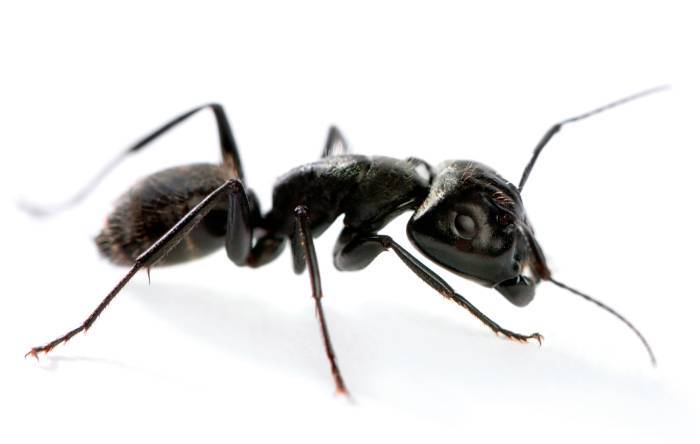
                                                   It reminds me of the shape of an ant. Nature is the mother of invention.

I have been trying to puzzle out why I pause to look at tractors plowing and how to translate it through language. A term which popped out of an essay in a previous reading seminar about dramaturgy, "free radicals" feels fit with the action of snowplowing tractors. David Pledger, an Australian artist and director, brings it forth in his essay Concentric Circles of Dramaturgy. For me, it translates into how the snowplows disrupt the usual traffic choreographies of the cities:

They maneuver around traffic lights and lamp posts, cross the streets, drive on pedestrian sidewalks and change the landscape. 

Snowplows carefully twist and turn, mechanically dancing in the process of curating snow in strategic locations, out of the beaten paths. The snow piles also tell us what is prioritized. A constant set design on the city level, if you may. Once they get too big, along the most central roads or focal nodes of transport, they're loaded on trucks and transported to a snow dump. 

With their arms extending from the tractor to the plow, with the human operating through levers in the cockpit, it's the closest one comes in everyday urban hustle to Transformers, cyborgs or Neon Genesis Evangelion.

   Snow ploughers might feel a bit like mecha pilots, I imagine. Or am I making it too much in my image?

As of now, the courses at the university have changed. Today we started a course on Expanded dramaturgies. Since it's my first day, I'm not very wise yet except for expectations. Our first task is to observe and sense weather. It's -8° celsius and the snow has stayed and accumulated since the end of December. Snow takes a huge part of both mine, but also other's weather observations in a debrief afterwards. 

"Zooming into a point that is not a vertex may cause the curve to rotate." - A mathematical language I linguistically have difficulty comprehending, while intuitively appreciating the aesthetic logic of geometry!

I have been observing snow on my explorations lately, to be able to pinpoint it in a verbal form. I take steps on the snow-covered roof terrace at the university. First I perceive it through my feet: The snow crunches beneath my soles, both a physical, tactile sensation and an auditory sensation. My next memory is a visual one: the untouched snow bank in the middle. Then I travel in the footsteps of someone before me, since it's easier and keeps my shoes dry. Due to the weather, and only starting the time spent outside, one has to make strategical choices in actions, I preserve activities that risk getting wet (and thus cold) for later. 

Paths of movement appear with time. The snowfall affects how we move, occasionally forcing us to take different routes on our way to familiar places. Some areas get more trodden and it's as if movement through space and time become compressed, materialized in the snow.

                                          Not the first to walk a narrow sidewalk close to the city center. 

It brings me back to psychogeography and noticing areas of pull or repulse in urban landscapes. Snow shows these also through their color, changing due to dirt and pollution, sometimes carried even from far away by the wind. Ripple effects in water's solid form. 

Snow can show which buildings still serve a function and which not.

These paths, in less urban central areas can tell cues of something being at the other end or along the way. They can be shortcuts, following more accessible, trekkable geographical forms in the environment or lead to places which for whatever reason (a nature sight for example) have called a bunch of people to a certain location. 

"A preference for places that offer shelter or a view—ideally both—can be considered universal. Places of shelter and outlook strongly support survival. All of Finland’s ancient hillforts are sites from which one can see far while remaining hidden. The capercaillie prefers to forage (that is, eat its winter food, pine needles) in the dense crown of an old pine growing on a rocky hill, from which there is good visibility of the surroundings." - Siksi paikoilla on väliä, Esoteerinen maantiede ja periferiaterapia, Marko Leppänen

                  One of the mesmerizing moments of my life, on top of a mountain range trespassing nation borders in Poland. 

                       With a little imagination, the right angle and spirit, snow banks can remind one of something larger than itself.

Snow itself lands as a blanket upon existing shapes on ground, making the forms curvier, softer and increasing the volume of the branches of a tree for example, thus, standing amidst trees covered by accumulated snow, a sense of shelter is increased, hence my calmness perhaps.

                                                                   
                                                 Two forms of shelter, glass roof covered by snow.


                                                                 Tree branches envelope.


                                        The path goes atop a fortified hill which offers glimpses of sunset.


"... the chimpanzees are experiencing an emotional reaction to forces of nature. How similar that is to our own spirituality; who among us is not stirred by the power of a towering, roaring waterfall, or energized and emotionally charged by a close bolt of lightning followed by a clap of thunder? Chimpanzees (and in my opinion, many other species) clearly are." - Exploring Evolution and Spirituality in Chimpanzees and Humans, Jane Goodall's Good for All News, Bill Wallauer

In the debrief afterwards I listen as someone expresses their joy and nostalgia in relation to first snow and the taste and texture of it. I feel sad that one ingests our pollution with it and can't try it without having a second thought. I share the joy and rush of going outside to welcome the first snow, and one of the core experiences for me is how the city sounds different. Accumulated snow muffles the sound.

Part of the urban living experience is to hear the constant noise of cars with studded tires in the long months leading up to winter weather, which finally, for a brief while when the snow is fresh and hasn't been plowed nor eroded away underneath the tires gets dampened. A silencing relief. 

In the debrief afterwards someone remarks that Finnish language has multiple words for the consistency of snow. The geography and weather has its effect on language. On the roof it's dry due to a cold day, Pakkaslumi loosely translates to minus-degree-snow. Loska, plus-degree-melting-snow known for its grey appearance is my nemesis and translates emotionally for me as wet shoe vitutus. The middle ground, when the temperature is tiptoeing around 0° modifies the form into suojalumi, shelter/slushy/heavy wet snow. It is a perfect day to gather your friends and sleds to embark on a laughter filled safe adrenaline adventure at a nearby hillside.

 The suojalumi might offer some friction, reducing speed. If you get bored, be open to the malleability offered by the weather. 
                                               The snow in this form is perfect for the sculptor. 

(I can ask for permission to share the location of our snowcastle, leave a comment if you'd like to contribute on the next suojalumi)

Bypassers stopped to take pictures of some of the sculptures made by those who waited for the late-arrivals to join the party. What a way to make transient art and spread attention from the usual focal points! 

 "I love snow. I feel honored to stand amidst slowly, lightly falling snowflakes and privileged to derive pleasure from it." I proclaim from the bottom of my heart, deeply, but not very seriously wishing that the first snow would stay and keep growing layers from December to March each year. It's like a long durational confetti cushioning inescapably large areas. It's also standing amidst something that you're slowly losing.

That durational confetti is raining less and shorter. Nothing is forever, especially snowmen. 

I have edited a passage away from here, because I don't feel capable nor comfortable to treat its subject at this point. I don't see a point of return either, so I will accumulate enough knowledge, spirits and fortitude to speak of it sometime, but I can't see a way to continue this blog after. I'm afraid all sentences will be dead ends and fouled. Perhaps one can tread backwards the path to hope. 


                                                                               Here, have a Rothko painting instead!


I go back to thinking about the "snowflower" uttered, and how we may need new ways to describe things to see them anew again, the potential of familiars in times of change. Blogging itself can be a semiurgic practice, i.e. "the production of new meanings by the creation of new signs; the expansion of the semiosphere."

Snow appears white in color despite being made of clear ice. This is because the many small crystal facets of the snowflakes scatter the sunlight between them.

That brings me to the work of artists, performers, journalists and writers. Work defined in a way that I'd love to partake in. The Great Work of a Master?

"Written words cause ripples in the fabric of reality."

Take this as a scream for help to preserve snow from a soul. 

Economics are the method; the object is to change the soul, said the British prime minister Margaret Thatcher on the brink of the 1980's as the UK, and large parts of the "West" shifted into next gear of neoliberalism.

"Herodotus' accuracy of information is in inverse proportion to geographical distance from the center: the more remote a country, the more need to rely on hearsay, and the higher the risk of receiving distorted facts" - Herodotus and the Ends of the World, Ippokratis Kantzios

There are souls who operate on different sets of values, co-operate, enjoy each other's company, dream and build snow castles without ever imagining an economic value in return, parting their ways knowing it will melt. There are places that appear momentarily waiting to be witnessed. There are spirits in places. Let us not forget the infinite values around us that occasionally fall as feathers, white confetti on us. 

                                                      Let's not let Margaret get the last word.


"Northward of that country snow falls continually, though less in summer than in winter, as is to be expected. Whoever has seen snow falling thickly near him knows of himself my meaning; for the snow is like feathers; and by reason of the winter, which is such as I have said, the parts to the north of this continent are uninhabited. I think therefore that in this tale of feathers the Scythians and their neighbours do but speak of snow in a figure. Thus then I have spoken of those parts that are said to be most distant." - Herodotus, Histories 


Friday, January 23, 2026

A derivé, on Situationists

6,00€

 I return to the ending location of my derivé, a bar and restaurant with 3,6 stars on Google Maps (which I wouldn't go to usually when navigating with Google review stars) but an exterior exactly to my liking. I've had an interest to tour bars off the trodden path, whether due to where they're situated or not being on the popular bar crawl list. The thirst for beers and "tuning one's hearing to the local bandwidth" have existed since I found http://ostarinhelmi.blogspot.com/, a blog that's been on an indeterminate break since 2007. It follows a blogger touring different suburban malls, detailing them and usually ending with a review of the local bar.

Drama at the counter, someone comes back, proving the barkeeper that they've been billed "in the morning due to the shit machine", showing their bank account. It ends in laughs and resolution. Receipts are shown and a new beer is bought with cash. 

I've decided to dedicate this post partly to a movement which is responsible for me being here and of inspiration for my attempts to combine geography, psychology and art into a shareable activity. 

Artists of the World, randomize!

At crossroads, an opening for a choice I've willingly given away.

To make this blog post, I've asked each individual present at the university course to give me a direction. This is my method to create a random path and distance me from my personal inclinations for an experiment in dérive. For a different experience, feel free to follow the directions given in any way that suits you while reading this post. 

Since our society has a propensity to pinpoint and attribute a lot to single personifications, usually in the "genius guy" archetype, "The Guy" of the movement, Guy Debord (who did publish A LOT, and very self-confidently) defines it like this in his Theory of the Dérive: 

"In a dérive one or more persons during a certain period drop their relations, their work and leisure activities, and all their other usual motives for movement and action, and let themselves be drawn by the
attractions of the terrain and the encounters they find there."

 My first question question (hereafter Q) was left/right? 

                                                                    First answer: Left.

I end up in a brief afternoon rush, walking behind two other persons, with an adult and a child having just brushed past me before taking this picture. 

Next question: Up/down?

Up. 

I know the spatial surroundings well enough, that I instantly zoom for the stairwell leading up to the residential area of Merihaka. I do scan around just to be sure that nothing else rises around, but I'm right. 

       Our technique of rapid passage through varied ambiances is briefly altered by the red light.
 
While walking, I wonder which method I should use for documentation. I'm tempted to record the whole drifting but quickly run into problems of limited memory on phone, so I end up taking short clips.

I'm stepping to my next question: North or South? North.

There is only one way north; down.

"The spatial field of a dérive may be precisely delimited or vague, depending on whether the goal is to study a terrain or to emotionally disorient oneself." Guy Debord, Theory of the Dérive, published in the Internationale Situationniste #2, 1958

Trying to navigate according to the directions, without my usual reasons for moving in familiar locations, having occasionally to go backwards to make the next step jolts me into a semi-confused state. On a journey which starting point is our campus, all directions are familiar, but the ways, order and reasons of moving are different and make me feel like a stranger, especially with my camera, I feel a need to "fit" in, wear a double layer of the "ordinary citizen" on his way somewhere he knows, just happening to forget the phone in hand on a busy day. Occasionally I pretend to just have missed some GPS direction. 


Screenshots of graffitis on the way down. Do the shapes of the stairs affect their style, and in turn my camera angle? It can be such a bodily art practice, with each movement, from hips to shoulder to elbow to the flick of the wrist affecting the result in combination with time sprayed and the form it's imposed on.

      You might just need one experience making graffiti to feel the images kinesthetic reverberations.

   The Guy of the movement. 


Northwards.

Question: R/L?
Answer: L

Upon a bridge I've walked many times, I get the impulse I regret as I start it, to record my dérive as a vlog.


The ironic, not completely dedicated actor takes over (and yet very genuine, I feel vulnerable in a way I haven't in a long time sharing this). That's where my attention largely is for the rest of the trip. What I found immensely challenging, something vloggers often do, is being so open with the bypassing citizens, or in a bubble of their own, steadfast in their Vlog-universe. I usually end up looking around, silently whenever meeting fellow citizens.

Northeast or Southwest?

NE

Amongst the private property and high-rise office spaces it's hard to constantly follow a specific direction, so I end up taking turns at crossings when available. I end up on an inner yard that feels "imposing", towering heights, but doing a 360°, does offer a nice space to take breaths. 

Q: Continue or go back?

"if in the course of a dérive one takes a taxi, either to get to a specific destination or simply to move, say, twenty minutes to the west, one is concerned primarily with a personal trip outside one’s usual
surroundings. If, on the other hand, one sticks to the direct exploration of a particular terrain, one is concentrating primarily on research for a psychogeographical urbanism." Ibid.

Continue.

 "Chance is a less important factor in this activity than one might think: from a dérive point of view cities have psychogeographical contours, with constant currents, fixed points and vortexes that strongly discourage entry into or exit from certain zones."

Situationists were a strongly subversive, political marxist movement, against the status quo of the society and culture, on the prowl to create situations which could offer other ways to live. On a dérive, in terms of urban exploration and acting on the street, it offers a sensibility for where the currents of the urban landscape are and then having a choice of breaking the routine or consciously following it. 

Q: ↑ or ↓?
↓


Q: L/R?
R

Q: Go back or go on?
Go on.

Southeast or Northwest?
Northwest.

I end up by the prison. Active prisons within cities, on the rare occasion one meets them, offer an uneasy, anxious feeling; to be locked in, limited within such a small area, knowing the city bustle goes on so close, outside the walls. 

I revert to vlogging, this time with an even stronger character, emulating the stereotypical gestus of popular vloggers. I feel it to be slightly tasteless close to the prison, but that's an interesting part of vlogging too: being in spaces and combining them with your own brand for exposition. 

I'm reminded of a obnoxious, controversial blogger, Logan Paul, who made a stir by vlogging at the Aokigahara (commonly known in west as the Suicide forest) and showing a suicide victim on the video. 

I do some Chekhov exercises, reflecting later on that it might be interesting video content of an actor preparing, I go back to record a re-enaction of them the following day, also stopping by the bar which felt adequate with the situationist movement.


"It must be admitted that none of this is very clear. It is a completely typical drunken monologue, with its incomprehensible allusions and tiresome delivery. With its vain phrases that do not await response and its overbearing explanations. And its silences." - From the film Critique of Separation, Guy Debaurd


I'm still following my last order:

Go home.


Thursday, January 22, 2026

ACT III: REFLECTIONS FROM ACTS I & II

 Here I will gather my reflections that have emerged in different places during the week after my journey in the previous acts.

Stepping on the bus, a political act

On the bus home from Hyrylä I reflect upon the choice I steadily stand by in my private life, even to humorous effect, that of being quite radically anti-taxi. If I were to organize a workshop or experiment with others as part of my research in places that would require transport, I feel that public transport would be the chosen method. 

I ponder upon the words of geographer and social scientist Doreen Massey in her essay A Global Sense 
Of Place regarding transportation. In it she postulates about the compression of time and space in a world where people, things and capital are transported through ever faster paces, in a phase Karl Marx dubbed  'the annihilation of space by time'. It's done by transport, from horsepower to ships, trains to cars, to airplanes. From post offices to emails. 

What is it that determines our degree of mobility, she asks, finding several intersectional factors, such as colonialism, ex-colonialism, racism, wealth and gender. I think of hearing about the threatening atmosphere and fear of violence in a bus a woman experienced. As a passing young Cis-male, buses are mostly to me at their worst places of social anxiety, rather than a place where I fear violence, feel ogled at or harassed. It is also a privilege that makes the choice of taking a bus, at night-time for example, easier. 

It is also true, that the time-space compression offered by technology is not happening for everyone. "It 
... the mobility and control of some groups can actively weaken other people." Massey talks of the the power geometry of time-space compression. "... For different social groups, and different individuals, are placed in very distinct ways in relation to these flows and interconnections." She quotes an example written by Dea Birkett:

"'Jumbos have enabled Korean computer consultants to fly to Silicon Valley as if popping next door, 
and Singaporean entrepreneurs to reach Seattle in a day. The borders of the world's greatest ocean have been joined as never before. And Boeing has brought these people together. But what about those they fly over, on their islands five miles below? How has the mighty 747 brought them greater com¬ munion with those whose shores are washed by the same water? It hasn't, of course. Air travel might enable business¬ men to buzz across the ocean, but the concurrent decline in shipping has only increased the isolation of many island communities... Pitcairn, like many other Pacific islands, has never felt so far from its neighbours. "  D. Birkett, New Statesman And Society, IS March 1991, p 38.

In the face of a world where capital increasingly roams freely around the world, increasing it's power in relation to relatively immobile workers Massey brings forth the importance of politics of mobility and access. 

This is when I pat myself on the back for stepping on the bus. One of the democratizing effects of choosing public transport, and in the lack of the huge infrastructure investments, buses in particular have: They offer stops, paths and method of transport for people living in rural or suburban areas, whom might not have the economic resources to buy a car. It also brings people from elsewhere visiting, creating a flux and exchange, keeping local services more viable.  

"... every time someone uses a car, and thereby increases their personal mobility, they reduce both the social rationale and the financial viability of the public trans¬ port system - and thereby also poten¬ tially reduce the mobility of those who rely on that system. Every time you drive to that out-of-town shopping centre you contribute to the rising prices, even hasten the demise, of the corner shop." 

In a world of increasing climate change, an increasing need for changes in our consumption and emissions are present. It is there, where preferring public transport systems over individual private cars can make a difference. In order for there to be a political and economical incentive to keep improving the public transportation system or even making choices in regards to city design where, in a democracy, the more there are users, the more political support one would assume there to exist. 

Regarding the following news, thanks to the telegraph system the information not only reached European newspapers, but those 10 000 kilometers away, like the Hawaiian Star and the Mexican Herald before peripheral Finnish regions like Vasa or Mikkeli, since local newspapers didn't have the capital to partake in the international news agencies. Interesting fact: modern data cable paths largely follow the same paths of those created for the telegraphs. 

Nikolai Bobrikov shot

“Finland’s Woes.” Evening Telegraph, 17 June 1904, p. 4. British Library Newspapers


The general-governor, who I remembered to be of national significance in the previous post was shot. 
Shot by an independence activist, nationalist, freedom fighter if you were an idealist, terrorist if you were a tsarist, who has become a fundamental part of the Finnish national myth. 


Here's an excerpt from the Wikipedia article describing the assassination and his shooter's last words and moments.

" Schauman specified his motivation in a text, which he had written only a few days before the murder: 

Freedom is its own destination. With specific and very small restrictions it is every human beings unquenchable privilege that no outside power can deprive them of. A human doesn't have the right to relinquish it on their own part, even less so for their children. Freedom is the base of self-respect, and without it the great learning of a humans ethical responsibility would be purely a lie and fraud. Freedom is a holy matter and love of freedom a deeply rooted natural instinct in our hearts. Do you love your country? Good, keep Ibsens words in your mind: "Even if you would give your all, but not your life, you haven't given anything."

A day before his deed, on the 15th of June, Schauman was at a shooting range training. On the goal mark there was imaged a bearded Russian, with a heart drawn chest height. The target mark was moved with the help of a twine for which a young man named Edvard Ellman was responsible for. After the rehearsal a satisfied Schauman was leaving the shooting range. Ellman asked him the reason for the movable target mark, which was different from normal. It's been said that Schaumann answered: A bad enemy is they, who stay in place when shot!" "

I place myself by the memories of shooting ranges, that of the Hyrylä biathlon track, which then opens doors to those at my garrison, where one pledges the oath to never act against the constitution. Yet that constitution only exists, in part, due to a criminal act against another set of legislature. 

How we talk about land and the defense of past, present and future places


Reflected upon: in our studio at school, while editing the blog about the garrison, taking part in a discussion with someone who will quit the army reserve, and then on a different day overhearing course mates discussing military service and it's monocultural lead in a negative tone,  also pondering the arbitrary nature of nation borders:

I feel emotions, once again hard to pinpoint as a single one or put into words. I feel a similar clog appearing somewhere above my chest and below my adam's apple. A need to say some things is filling up my body and tensing my system, but my thoughts are contradictory, in a dialogue, polylogue, a multi-Hegelian expanding chaos of thesis's, anti-thesis and synthesis, contradictions that pull the rug of those thought up constructions. The voice of social anxiety and conflict-escaping tells me to write it down, let time, the writing and editing process distill an opinion.

I feel a despair, a cynical feeling that animals and humans have caused suffering to each other throughout history and a lack of hope that humans would ultimately be above the nature which is so. Yet I feel that if we'd were to abandon the striving after morals and ethics for the greater good, which we also have been given a capacity to, is to wave a white flag in a battle for something greater than the sum of it's parts, to give up on an utopia, to succumb in front of the ideological bullet of "political realism" and nihilistic materialist determinism.

I take a new look at that location as I edit the post about the Hyrylä garrison thanks to the discussions provided by the environment and its people. It is then, when I try to see how the positive things could be synthesized and serve something wider than nation state, its protectors and the properties it protects, that I modify the military oath into one for nature (can be read in the post below). 

Hyrylän hävittäjät - one of the vast plain of suburban hell car dealerships explained

I read upon pages talking of the history of Tuusula that Hyrylä was full of gravel pits, which then was transported to the main city region for construction sites of roads etc. This gave rise to a lot of gravel and car transportation entrepreneurs, which got a nickname Hyrylän Hävittäjät due to their reckless and fast driving (not translating well, in Finnish the same word is used for fighter jets and literally means eradicator). This is possibly the original human imprint both for the "geographically unusual" plain, ie. former gravel pit, then having worked as a site for a power plant I found myself on and also offered an explanation for the car dealerships on the way. Due to the need to transport the gravel, car repair shops and stores with materials sprung up in the area. 

https://yle.fi/a/20-97907 (a news clip of it, by the legendary journalist Hannu Karpo, albeit in Finnish)

Blog - An alternative of human stream-of-consciousness 

While getting second hand thoughts and asking myself why I'm writing this blog, I've been thinking of the as of now, outdated structure of it amongst the current social media landscape. Blog posts tend to be longer and offer more chains of association than the shorter posts I'm used to seeing on Facebook, Instagram or similar platforms. It also feels more connected to the journaling tradition, offering a certain possibility to approach it with journalistic qualities. But at the same time it's a blog, so I have the full right to poet away, delve into personal anecdotes, thoughts and forming opinions. I was also having a particularly paranoid moment in my bed, scrolling Reddit and spiraling into the Dead Internet Theory, which simply put is the theory that almost all organic activity has been replaced by content manufactured by A.I, bots and corporations. How can I know if I'm reading human thoughts or A.I. language equations? Perhaps here, on a blog, one can trace organic thoughts as they are born, see them looming before being formulated, disappearing, changing shape and associate into wider contexts. 

That is also what is very intriguing to me in the form of a blog: the chronology of it. You can move between posts as you wish, you can start from the most recent, that appears first, and scroll down to where it all began, or do vice versa, or pick one from the middle that appeals by it's outlook. 


Going back

This blog also acts as an anchor, a memory of a sense of a place, which both gives birth to reflection, and is reflected upon the spaces I'm in afterwards. Rarely have I gone back to a specific place of no personal importance to this detail. In terms of this project, I have the full power to edit my posts for as long as I feel fit before publishing, or even back to old blog posts and edit them as I wish, if I feel artistically or journalistically a need to fill or change some information. It's walking a tightrope though, I hope to keep the train of thoughts clearly visible, giving space for each action, no matter how banal, on this way to a Master's thesis. At the same time I'm having a hard time to find enjoyability in the banality that I often feel appears if only writing from the present moment as a writer and reader. The present is not even physically possible for me in the current weather, my fingers freeze if I try to write down my thoughts as they appear at the locations. 


A Looming disaster & Call to Action!

One must not put a loaded rifle on the stage if no one is thinking of firing it. Thus a rule in drama came to be known as the "Chekhov...